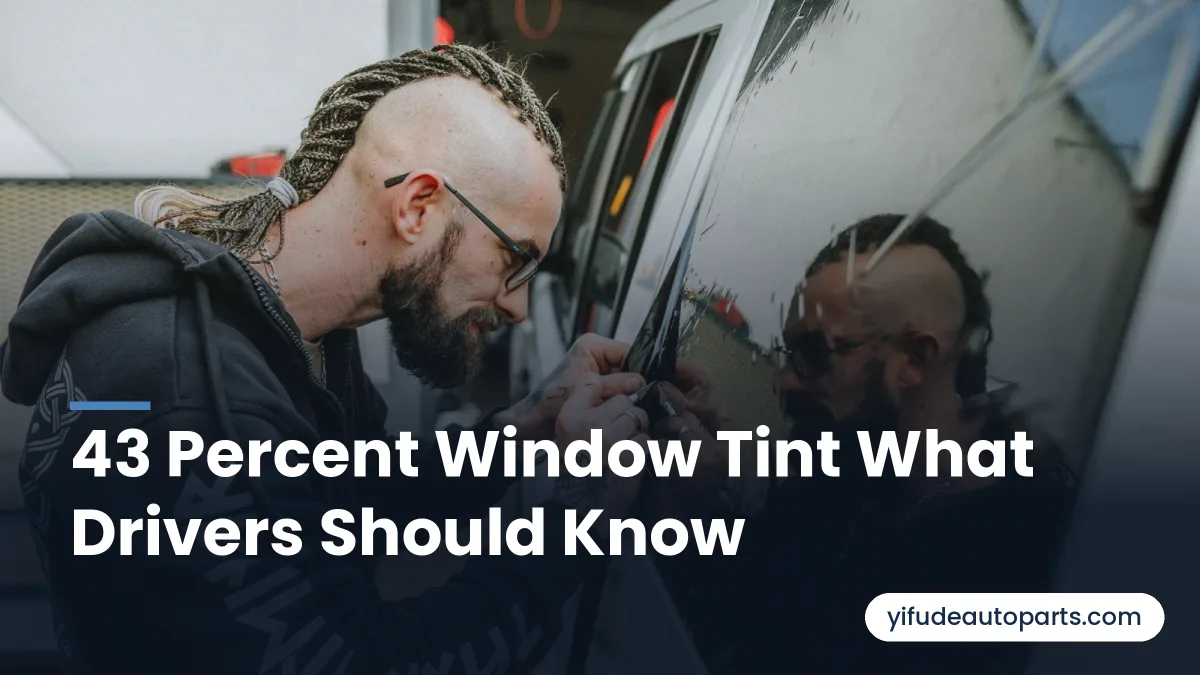
43 Percent Window Tint What Drivers Should Know
As an Amazon Associate we earn from qualifying purchases. Guides are for general information; always check your owner's manual and consult a qualified mechanic when unsure.
43 Percent Window Tint: What Drivers Should Know starts with a simple fact. The number tells you how much light gets through your glass. A 43% tint lets 43% of visible light pass into the car. It blocks the rest.
Many drivers choose this level for a balanced look. It adds style without making the cabin too dark. You still see the road clearly. But you also cut down on glare and heat. Always follow official safety and maintenance guidelines for best results.
Not all tint works the same way. Factory tint and aftermarket film differ a lot. Your car may already have some tint from the factory. Aftermarket film adds a new layer on top. The combined effect changes what you see.
That is why knowing your base tint matters. A 43% film over a factory tint can drop your total light far below 43%. Police use a device called a tint meter. It measures the real light passing through your glass. The reading they get is what counts at a traffic stop.
43 Percent Window Tint: What Drivers Should Know also means checking your state laws. Some states allow 43% on certain windows. Others set a lower limit. You could get a ticket if your tint is too dark. The rules vary by location.
They also vary by window type. Your windshield, side windows, and rear window may each have different limits. The AS-1 line on your windshield sets a clear boundary. Tint above that line is often illegal. Knowing the rules keeps you safe and legal on the road.
Decoding the 43 Percent Vlt Standard and How It Is Measured
VLT stands for Visible Light Transmission. It is the percentage of light a film lets through. A 43% VLT film passes 43% of visible light. It blocks 57% of the light hitting the glass. This measurement uses a tool called a spectrophotometer.
The device shines light through the film at a set angle. It then reads how much light comes out the other side. The result gives the exact VLT number. This is the same method law enforcement uses with a handheld tint meter. The reading must match the legal limit for your state.
The AS-1 line on your windshield marks a key boundary. This line runs from the top of the windshield down. It sits about 5 inches from the top edge in most cars. Tint applied above the AS-1 line is often not allowed. Some states allow a small tinted strip there.
But the strip must stay within strict limits. The DOT FMVSS 205 standard sets rules for safety glass. It ensures that tinted glass does not block driver sight lines. The ANSI Z26.1 standard also tests how glass and film handle light. Together, these rules shape what is legal and safe on US roads.
- VLT Definition: The percent of visible light that passes through your film and glass combined.
- Spectrophotometer: The lab tool that measures exact light transmission at specific wavelengths.
- Tint Meter: The handheld device police use to check your tint during a traffic stop.
- AS-1 Line: The marked boundary on your windshield above which tint is usually illegal.
43 Percent Window Tint: What Drivers Should Know Before Choosing a Film
43 Percent Window Tint: What Drivers Should Know starts with film type. You have several options on the market. Ceramic film blocks heat well. It also cuts glare without adding shine. Carbon film looks sleek and does not fade fast.
Dyed film costs less but may bubble over time. Metallic film adds strength but can block radio signals. Each material acts differently at 43% VLT. The choice changes how your car looks and feels inside.
Your car’s factory tint plays a big role too. Many new cars come with a light tint already. This base tint might be 15% to 20% VLT. Adding a 43% film on top lowers the total light. The combined VLT can drop to 30% or less.
That may put you over the legal limit. You should ask your dealer for the factory tint spec. Or use a tint meter to check the base glass yourself. This simple step saves you from a costly mistake.
Night driving safety also matters when you pick a film. A 43% tint is lighter than most dark tints. It still cuts a good share of glare. But it lets more light in than a 20% or 5% tint. That helps you see better at night.
You will still notice some glare from oncoming headlights. The film reduces eye strain on long drives. It also blocks UV rays that fade your dashboard and seats. A good 43% film balances comfort and clear sight lines.
- Film Type: Ceramic, carbon, dyed, and metallic films each act differently at 43% VLT.
- Tint: Your base glass tint lowers the final VLT when you add aftermarket film.
- Night Safety: A 43% tint keeps more light in than darker options for better night sight.
- UV Block: Quality films block most UV rays even at 43% light transmission.
Legal Compliance: Where 43 Percent Tint Crosses the Line Into Violation
Tint laws change from state to state. A 43% tint that is fine in one state may break the law in another. Some states allow up to 50% VLT on side windows. Others set the limit at 35%.
You must check your state’s exact rules. The DMV website or a local tint shop can help. They know the current legal limits for your area. Ignorance of the law does not stop a police officer from writing a ticket.
Police use a tint meter to check your windows. They aim the device at the glass from inside the car. The reading shows the real VLT of the tinted glass. If the number is below the legal limit, you get a citation. The fine can be steep.
In some states, you must remove the tint to pass inspection. A ticket can also add points to your license. That raises your car insurance costs over time. The risk is not worth a dark tint that breaks the rules.
Medical exemptions exist in some states. A doctor can write a letter for darker tint. The letter must stay in your car at all times. Law enforcement vehicles may also have tint exemptions. But these rules do not apply to regular drivers. For complementary picks and expert testing advice, see our guide on Should I Get 35% or 20% Tint? Tips and Best Practices.
If you are unsure about your tint, get it tested. A pro shop can measure your current VLT with a tint meter. They can tell you if your 43% film keeps you legal. When in doubt, choose a lighter tint to stay safe and avoid fines.
- State Rules: Each state sets its own VLT limit for side and rear windows.
- Tint Meter: Police use this tool to get the real light transmission reading on your glass.
- Medical Exemption: Some states allow darker tint with a valid doctor’s letter in your vehicle.
- Inspection Risk: Tint that is too dark can cause you to fail a state safety inspection.
The Physics of Light Transmission: Why 43 Percent Changes Driver Visibility
Light moves fast. It hits your glass and either passes through or bounces back. A 43 percent rating means 43 out of 100 light rays get through. The rest stays outside. That simple math shapes how you see the road.
Your eyes need a certain light level to work well. In dim settings, your pupils grow wide. They grab every bit of light they can. Dark tint cuts that light supply. It can make the road look fuzzy at dusk.
Glare from sun or headlights hits your eyes hard. A good film cuts that glare. It helps you keep your focus. But too much tint blocks too much light. That tradeoff matters a lot at night.
- Photopic Vision: This is your daytime eye mode. It needs clear light to read signs and spot colors fast.
- Mesopic Vision: This is the twilight zone. Your eyes mix day and night modes. Low light here hurts depth perception.
- Scotopic Vision: This is your night mode. It needs all the light it can get. Dark tint can starve your eyes here.
- Glare Reduction: A good film blocks harsh light. It cuts eye strain without killing your view of the road.
Your windshield has a special top strip. It is called the AS-1 line. Tint above this line is often allowed. But the rest of the windshield must stay clear. This rule keeps your view of the road ahead open and safe.
Film Materials and Performance: Ceramic, Carbon, and Dyed Options at 43 Percent
Not all tint films are the same. The material you pick changes how the film works. Each type handles heat, glare, and light in its own way. A 43 percent rating can look different from film to film. Your choice affects both looks and safety.
Ceramic film uses tiny particles. These particles block heat very well. They do not add metal to your glass. That means no signal problems for your phone or radio. Carbon film also blocks heat. It has a matte finish that looks sleek. Dyed film is the budget pick. It adds color to the glass. But it can fade over time. Each film type has its own strengths.
- Ceramic Film: It blocks the most heat. It keeps your car cooler on hot days. It also has no metal in it.
- Carbon Film: It gives a deep black look. It blocks heat well and does not fade fast. The matte finish cuts glare too.
- Dyed Film: It is the cheapest option. It adds color and blocks some light. But it can bubble or peel over time.
- Metalized Film: It adds tiny metal bits to the film. This boosts strength and heat rejection. But it can block radio signals.
Heat rejection is not the same as light transmission. A film can reject heat but still let in 43 percent light. You must check both numbers. Look for the total solar energy rejected rating. This tells you how much heat stays out of your car. A higher number means a cooler ride. Ask your installer for the spec sheet.
Installation Pitfalls and Long-Term Maintenance of 43 Percent Tint
Bad installation can ruin good film. Bubbles form when the film sticks wrong. Dust trapped under the film causes spots. The edges can peel up if the work is poor. A bad job can also block your view. That creates a safety risk on the road.
You can install tint yourself. DIY kits cost less. But they need patience and skill. The glass must be cleaned perfectly. Any tiny bit of dust shows under the film. The film must go on smooth. Air pockets lead to bubbles. Over time, those bubbles grow. They also make the tint look bad. For complementary picks and expert testing advice, see our guide on Hybrid Auto Tint What It Is and How It Works.
Pro installation costs more. But it gives a cleaner result. A pro has the right tools. They know how to handle the film without dust. They also cut the film to fit your glass. A good fit means fewer edge lifts. It lasts longer and looks better.
- Pre-Install Cleaning: The glass must be spotless. Any dust or grease shows through the film later.
- Film Shrinkage: Film shrinks as it dries. This can cause bubbles or a loose fit at the edges.
- Adhesive Failure: Bad glue lets the film lift. It peels from the corners or the center of the glass.
- Color Shift: Some films change color over time. This happens from sun exposure and heat inside the car.
You must care for your tint after it goes on. Wait at least three days before rolling your windows down. The film needs time to cure fully. Use a soft cloth to clean the glass. No harsh cleaners or rough sponges. They can scratch or damage the film. A little care keeps it looking good for years.
| Film Type | Heat Rejection | Signal Blocking | Durability | Cost Level |
|---|---|---|---|---|
| Ceramic | High | None | Long lasting | Premium |
| Carbon | Medium to High | None | Good | Mid Range |
| Dyed | Low to Medium | None | Lower | Budget |
| Metalized | High | Yes | Good | Mid Range |
Frequently Asked Questions
Is 43 Percent Window Tint Legal on All Car Windows?
No, it is not. The law changes by state. Many states allow 43 percent on side and rear windows. But they often ban it on the windshield. Some states only allow very light tint on the driver and passenger doors. You must check your state’s specific rules. A local tint shop can help you find the exact limits.
Can I Use a Tint Meter to Check My 43 Percent Tint?
Yes, you can. A tint meter measures the actual light passing through. It gives you a precise VLT number. Police use these meters during traffic stops. You can buy a handheld meter online. It helps you check if your tint is within legal limits. This can save you from a costly citation.
Does 43 Percent Tint Block Uv Rays From the Sun?
Yes, most quality films block UV rays. Even at 43 percent light transmission, the film can block 99 percent of UV. This helps protect your skin and your car interior. It slows fading on your seats and dashboard. Check the product spec sheet for the UV rejection rate.
How Long Does 43 Percent Tint Last Before It Needs Replacing?
Good film lasts five to ten years. Ceramic and carbon films last the longest. Dyed film may fade or peel in three to five years. The lifespan depends on the film type and the care you give it. Sun exposure and cleaning habits play a big role too.
Will 43 Percent Tint Make Night Driving Harder?
It can. A darker tint reduces the light coming in. This may make the road look dim at night. It can also add glare from oncoming headlights. If you drive a lot at night, pick a lighter tint. You can also choose a film with high glare reduction to help your eyes.
Final Thoughts and Next Steps
Choosing 43 percent window tint is a smart move for many drivers. It balances glare control with safe view. But you must know your local laws. Check your state rules before you buy any film. Use a tint meter to check your installed film. This keeps you legal and safe on the road. The right film also protects you from UV rays and excess heat.
Take your time when picking a film. Compare ceramic, carbon, and dyed options carefully. Talk to a pro installer about your needs. They can guide you to the right choice. Clean your tint the right way to make it last. When you follow these steps, you get the best results. 43 percent window tint works well when you pick it with care and stay within the law.
One Comment